
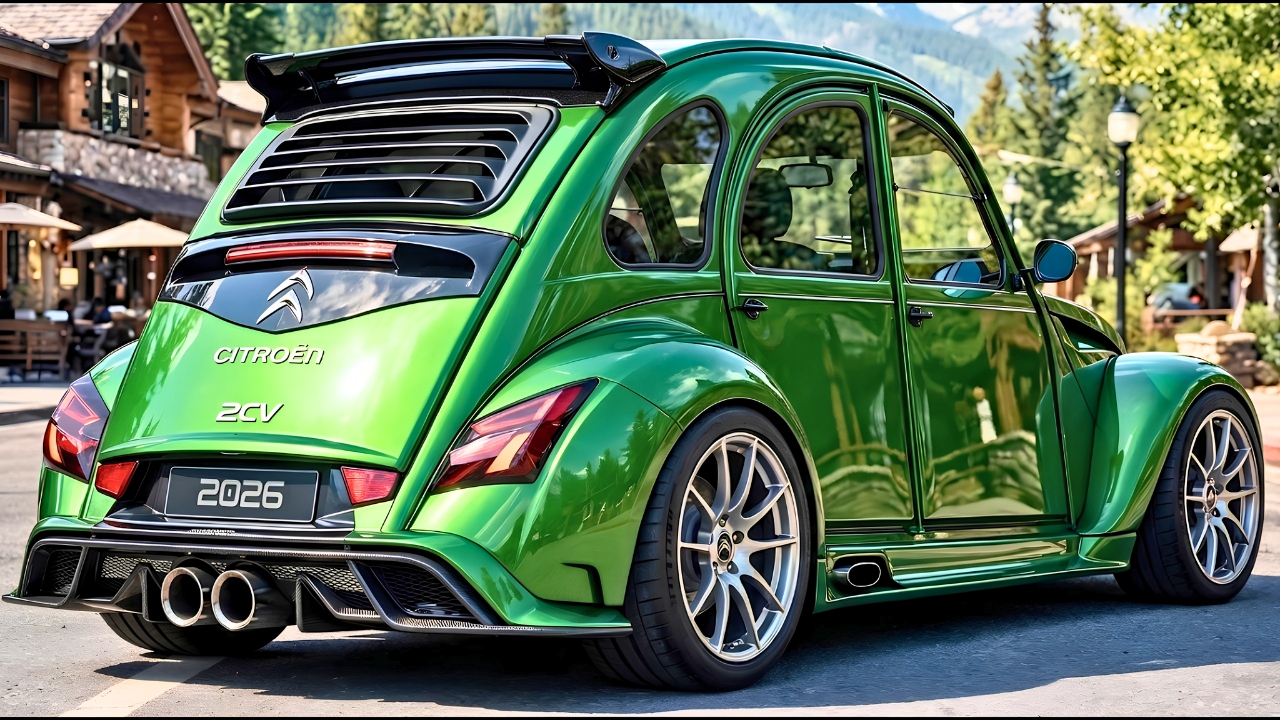
Citroën 2CV Guide: The automotive world has seen many legendary vehicles, but few have the charm, simplicity, and cultural significance of the Citroën 2CV. Known for its minimalistic design and practical engineering, the Citroën 2CV became a symbol of affordable mobility in post-war Europe. It was not just a car; it was a solution to a social need, designed to help rural communities in France travel with ease over rough and undeveloped roads. Even today, it continues to attract enthusiasts, collectors, and vintage car lovers across the world.
History of Citroën 2CV
The story of the 2CV begins in the late 1930s when Citroën started working on a project called “TPV” (Très Petite Voiture), meaning very small car. The goal was to create a vehicle that could transport farmers, carry goods, and handle uneven countryside roads while remaining extremely affordable. However, World War II delayed its development.
After the war ended, the project was revived, and in 1948, the Citroën 2CV was officially launched at the Paris Motor Show. The design immediately caught attention due to its unusual appearance and practical engineering. Many people initially laughed at its simplicity, but it quickly proved its worth. Over the years, it evolved slightly but maintained its core identity. Production continued for decades, making it one of the longest-running car models in automotive history.
Design Philosophy and Features
The design philosophy of the Citroën 2CV was centered around simplicity, durability, and affordability. Every part of the car was designed to serve a purpose without unnecessary complexity. The car featured a lightweight body, a soft suspension system, and an air-cooled engine that made it easy to maintain even in rural conditions.
One of the most unique aspects of the 2CV was its suspension system, designed to allow the car to cross a field with a basket of eggs without breaking them. This exaggerated claim highlighted its exceptional comfort on rough terrain. The car also had a very basic interior with simple seats, a minimal dashboard, and manual controls that were easy to repair.

The folding canvas roof was another iconic feature, allowing passengers to enjoy open-air driving. This made the car especially popular in rural France, where practicality mattered more than luxury.
Despite its simplicity, the engineering behind the 2CV was surprisingly clever. It used lightweight materials and efficient design choices that kept costs low while maintaining reliability.
Driving Experience
Driving the Citroën 2CV is often described as a unique and nostalgic experience. Unlike modern cars, it does not offer high speed or advanced technology. Instead, it focuses on comfort, control, and simplicity.
The engine is modest, producing limited horsepower, which means acceleration is slow by today’s standards. However, this was never the goal of the vehicle. The 2CV was designed for steady and reliable transportation rather than performance.
The steering is light and responsive, making it easy to handle even on narrow rural roads. The soft suspension provides a floating sensation, especially on uneven surfaces. Many drivers describe it as feeling more like gliding than driving.

The noise level inside the cabin is relatively high, and the ride can feel bouncy on highways. However, enthusiasts appreciate these characteristics as part of its charm. It offers a raw and mechanical driving experience that connects the driver directly to the road.
Cultural Impact
The Citroën 2CV became more than just a vehicle; it became a cultural icon. In post-war France, it represented freedom, accessibility, and progress. Farmers, students, and working-class families could finally afford a personal vehicle, which transformed daily life.
Over time, the 2CV appeared in films, literature, and advertisements, becoming a symbol of French identity. Its quirky design and friendly personality made it recognizable worldwide. Even outside Europe, it gained a loyal fan base among vintage car collectors and automotive historians.
Car enthusiasts often gather at 2CV festivals and rallies, celebrating its legacy and preserving its history. The vehicle is also admired for its sustainability philosophy, as it was designed to use minimal resources long before environmental concerns became mainstream.
Why It Still Matters Today
Even though modern cars have advanced technology, safety features, and powerful engines, the Citroën 2CV remains relevant in discussions about automotive design and philosophy. It represents an era when engineering focused on necessity rather than luxury.

Collectors value it for its historical significance and emotional appeal. Restored models are often displayed in museums and car shows, where they attract attention from all age groups. The 2CV also serves as inspiration for modern designers who aim to create simple, efficient, and cost-effective vehicles.
In an age dominated by digital systems and automation, the 2CV reminds us of the beauty of mechanical simplicity. It proves that a car does not need to be complex to be meaningful or successful.
Key Highlights
The Citroën 2CV was designed as an affordable and practical car for rural France
It was first introduced in 1948 and became a long-running automotive success
Its lightweight design and soft suspension made it ideal for rough roads
The car is known for its simplicity, ease of maintenance, and reliability
It played a major role in improving mobility for ordinary people after World War II
The 2CV became a cultural icon and remains popular among vintage car enthusiasts
It represents a philosophy of minimalism and functional engineering in automotive history
Final Words
The Citroën 2CV is more than just a classic vehicle; it is a story of innovation driven by necessity. Created by Citroën, it redefined what a car could be for ordinary people. The Citroën 2CV continues to be admired for its simplicity, charm, and historical importance.In today’s fast-moving automotive world, the 2CV stands as a reminder that true innovation is not always about complexity or speed. Sometimes, it is about making life easier, more accessible, and more enjoyable for everyone. Its legacy continues to inspire designers, engineers, and car lovers around the globe, ensuring that the spirit of the 2CV will never fade.