
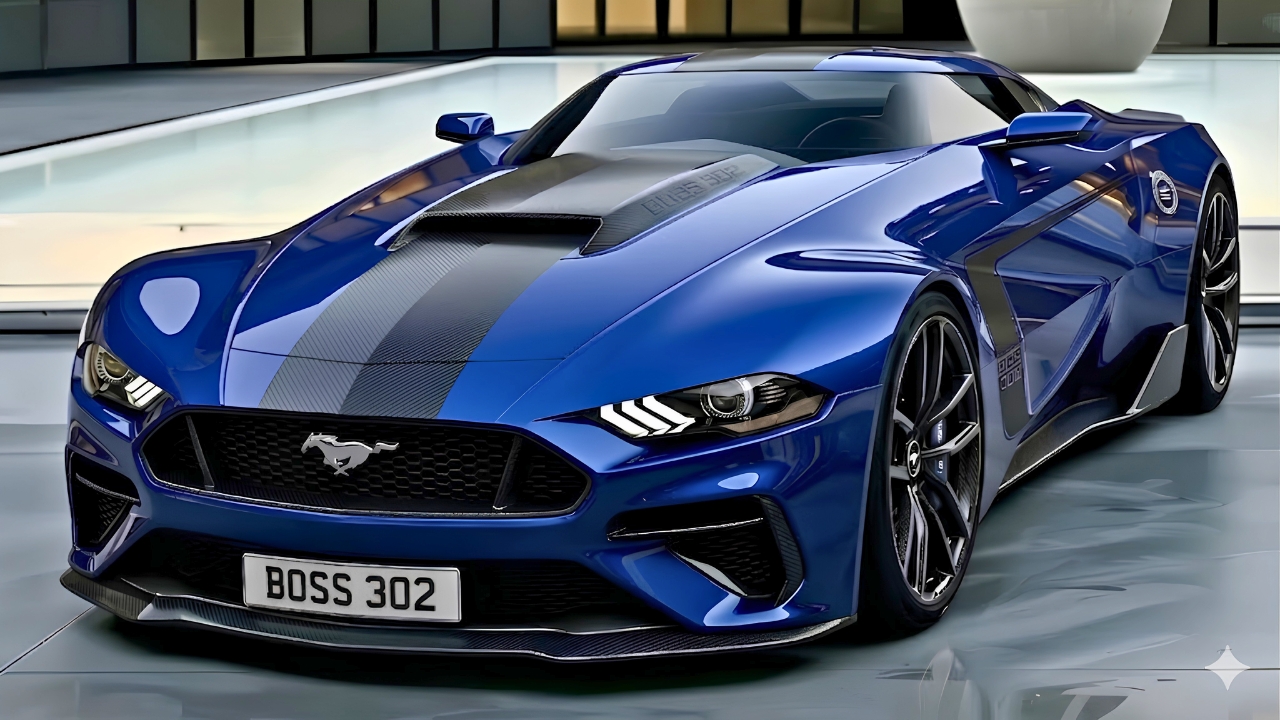
Ford Mustang Boss 302: The Ford Mustang Boss 302 is one of the most iconic names in American automotive history. Known for its raw power, aggressive styling, and deep connection to motorsport culture, the Boss 302 represents a golden era of muscle cars where performance and simplicity defined greatness. Developed by Ford, this legendary machine was originally designed to dominate the Trans-Am racing series, and over time it became a symbol of performance engineering and driving passion.
Even today, decades after its first introduction, the Boss 302 continues to attract car enthusiasts who appreciate naturally aspirated power, track-focused handling, and classic muscle car character. Its legacy is not just about speed—it is about engineering purpose, racing heritage, and a driving experience that feels pure and mechanical.
The Origin of a Racing-Bred Legend
The Boss 302 was first introduced in 1969 as Ford’s direct response to rising competition in the Trans-Am racing series. At that time, Ford needed a car that could compete against lightweight, high-revving small-block engines from rival manufacturers.
The result was a specially engineered 302 cubic-inch V8 engine designed specifically for racing regulations. This engine was not just about straight-line speed; it was built for balance, durability, and high RPM performance on road courses.
Ford’s goal was simple but ambitious: create a Mustang that could win races while still being available to the public. That philosophy gave birth to one of the most respected performance variants in the Mustang lineup.
Aggressive and Functional Exterior Design
One of the most striking features of the Ford Mustang Boss 302 is its purposeful and aggressive design. Unlike standard Mustang models, the Boss 302 was shaped with performance in mind rather than just aesthetics.
The front end features a bold grille design with functional air intakes that help cool the engine during high-performance driving. The hood often includes a matte black stripe or scoop design, which not only enhances appearance but also improves airflow.
The body sits lower and wider compared to regular Mustang variants, giving it a more planted and race-ready stance. Signature side stripes, racing decals, and unique Boss badging further distinguish it from other models.

At the rear, the design remains clean but aggressive, with dual exhaust outlets and subtle aerodynamic enhancements that improve stability at high speeds. Every design element serves a functional purpose, reflecting its racing DNA.
Powerful Engine Built for High RPM Performance
At the heart of the Boss 302 lies its legendary 5.0-liter V8 engine, engineered specifically for high-revving performance and track durability. Unlike traditional muscle car engines that focus only on low-end torque, the Boss 302 was designed to deliver power across a wide RPM range.
This engine produces strong horsepower and is capable of revving to high levels, making it ideal for racing conditions where sustained performance matters more than short bursts of speed. The intake system, camshaft design, and exhaust tuning were all optimized to improve airflow and engine response.
Paired with a manual transmission in most configurations, the Boss 302 delivers an engaging driving experience that puts full control in the hands of the driver. The clutch response, gear ratios, and throttle tuning were all designed to create a direct connection between driver and machine.
This is not just a straight-line muscle car—it is a precision tool built for both road and track performance.
Track-Focused Handling and Suspension Setup
One of the most important aspects of the Boss 302 is its racing-inspired suspension system. Ford engineers made significant upgrades compared to standard Mustang models to ensure better cornering ability and stability at high speeds.
The suspension setup includes stiffer springs, performance-tuned dampers, and upgraded sway bars. These changes reduce body roll and improve grip during aggressive driving.
The steering system is also calibrated for sharper response, allowing drivers to feel more connected to the road. Combined with wider performance tires, the Boss 302 offers significantly improved cornering capability compared to standard muscle cars.

Braking performance is another area where the Boss 302 excels. High-performance brake components ensure consistent stopping power even under repeated heavy use on track conditions.
Interior Focused on Driving Experience
Inside the Ford Mustang Boss 302, the focus remains on performance rather than luxury. While modern versions include more comfort features than the original 1969 model, the interior still maintains a driver-centric layout.
The seating position is low and sporty, giving drivers a cockpit-like feel. Sport seats with enhanced side bolstering help keep the driver stable during high-speed cornering.
The dashboard is simple and functional, with clear instrumentation that prioritizes speed, RPM, and engine performance data. In newer versions, digital displays and performance monitoring systems have been added to enhance usability.
Despite its performance focus, the interior still provides essential comfort features, making it suitable for both daily driving and weekend track use.
Racing Heritage and Motorsport Success
The Boss 302 was not just a road car—it was a race car built for competition. In the late 1960s and early 1970s, it played a major role in Ford’s success in the Trans-Am racing series.
Drivers and teams appreciated its balanced handling, strong engine reliability, and competitive performance against rival manufacturers. This racing success helped establish the Mustang brand as a serious performance contender rather than just a stylish coupe.
The racing legacy of the Boss 302 continues to influence modern Mustang development. Many of its engineering principles have been carried forward into newer performance models, ensuring that its DNA still lives on today.

Modern Revival and Collector Appeal
In later years, Ford revived the Boss 302 nameplate for special edition Mustang models, blending classic inspiration with modern performance technology. These newer versions featured upgraded engines, improved aerodynamics, and track-focused enhancements.
Collectors and enthusiasts highly value both original and modern Boss 302 models due to their limited production and historical significance. The combination of racing heritage and strong performance makes it one of the most desirable Mustang variants ever produced.
Today, the Boss 302 is considered a collector’s car that represents the pure essence of American muscle performance.
How It Compares to Modern Performance Cars
Even in today’s advanced automotive world, the Boss 302 holds its ground as a respected performance machine. While modern sports cars may offer more technology and hybrid systems, the Boss 302 is appreciated for its mechanical simplicity and raw driving experience.
It competes in spirit with performance models from brands like Chevrolet Camaro and Dodge Challenger, but its focus on track balance gives it a unique identity.
Enthusiasts often describe it as a driver’s car—one that rewards skill, precision, and engagement rather than relying solely on electronic aids.
Key Highlights
- Legendary American muscle car with racing heritage
- Built by Ford for Trans-Am competition success
- High-revving 5.0-liter V8 performance engine
- Track-focused suspension and handling upgrades
- Aggressive yet functional aerodynamic design
- Manual transmission for pure driving experience
- Sport-oriented interior with driver-focused layout
- Strong braking and cornering performance
- Highly respected collector and enthusiast vehicle
- Iconic nameplate in Mustang performance history
Final Words
The Ford Mustang Boss 302 remains one of the most iconic and respected performance cars ever created. Its combination of racing heritage, powerful naturally aspirated engine, and track-focused engineering has secured its place in automotive history.Unlike modern cars that rely heavily on electronics and hybrid systems, the Boss 302 represents a raw and engaging driving experience that true enthusiasts still admire today. It is more than just a car—it is a symbol of American muscle engineering at its finest.